Today, I worked with an AI agent to reconcile my BTC options trades on Bybit, calculate the net premium collected, prepare a small Bitcoin purchase, and record the completed transaction in my TerraM Token spreadsheet.
This was a real account, real trades, and a real purchase.
The amount involved was modest: a budget of 2.796 USDC. But the workflow demonstrated something much more interesting than the size of the trade.
Agentic trading is already here—and some of its most useful work happens around the execution button.
First, reconcile what actually happened
My starting request was straightforward: update the TerraM Token spreadsheet with the latest BTC call options from Bybit.
The agent checked Bybit’s trade history against the existing BTC ledger in Sheet103 and found four missing call sales. It added the execution dates, quantities, strikes, expiration dates, premiums, and trading fees, preserving the spreadsheet’s existing format.
Then I noticed my own mistake.
I had sold two separate 0.02 BTC calls that day, creating more short-call exposure than I intended. I closed one position myself and asked the agent to update the records.
The agent verified the buy-to-close transaction for the November 17 BTC call with a 68,500 strike:
| Transaction | Amount |
|---|---|
| Opening premium received | 0.800 USDT |
| Opening fee | −0.048 USDT |
| Buyback cost | −0.200 USDT |
| Closing fee | −0.012 USDT |
| Realized net profit | 0.540 USDT |
The remaining BTC options position was a short 0.02 BTC call at the 66,500 strike, expiring November 17.
Both opening trades stayed in the ledger. The closing transaction became a separate entry, preserving the full history.
Turning net premium into a purchase budget
Next, I asked how much net premium we had collected since the last BTC purchase, including the closing trade.
The calculation was:
3.008 USDT from four call sales after fees − 0.212 USDT for the closing trade = 2.796 USDT.
I wanted to use that amount to accumulate more BTC.
This is where checking the account mattered. Bybit showed no available USDT and an existing USDT debt. There was, however, an available USDC balance.
The agent flagged the difference, and I explicitly approved using 2.796 USDC instead.
That distinction matters for the accounting: the options premiums were denominated in USDT, while the Bitcoin purchase used USDC. We used the same numerical budget in USDC; this workflow did not include a USDT-to-USDC conversion.
Preparing the order, with a human submitting it
The agent prepared a BTC/USDC spot market buy with a value of 2.796 USDC and margin switched off.
Then it stopped for me to submit the purchase.
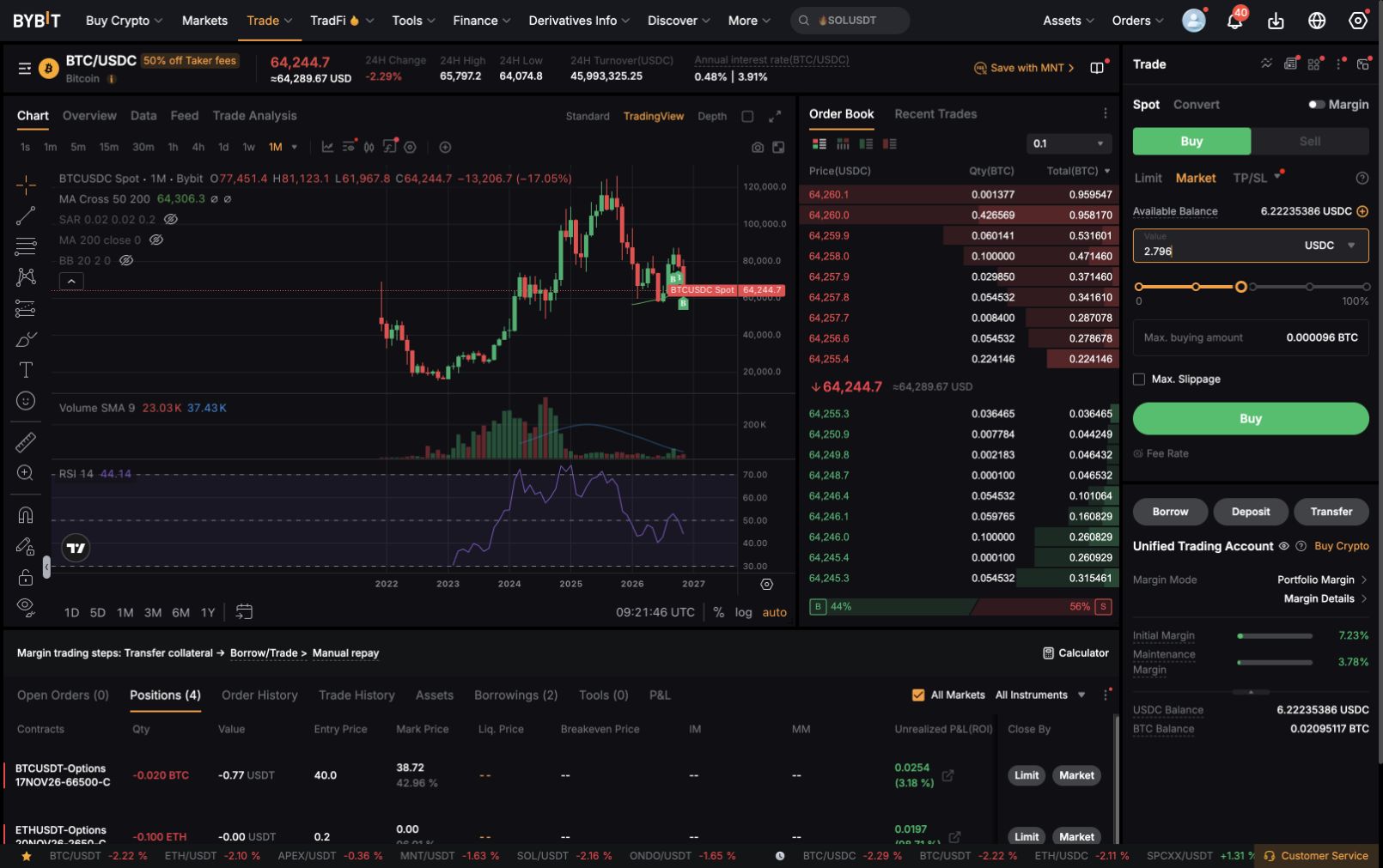
This was an agent-assisted trading workflow with a human execution step. The agent handled reconciliation, calculation, preparation, and recordkeeping. I retained control of the purchase submission.
Verifying the actual fill
After I submitted the order, the agent returned to Bybit’s trade history and checked the completed transaction.
The actual fill was:
| Purchase detail | Result |
|---|---|
| Execution price | 64,246.8 USDC per BTC |
| Gross BTC purchased | 0.000043 BTC |
| Actual cost | 2.7626124 USDC |
| Trading fee | 0.0000000215 BTC |
| Net BTC received | 0.0000429785 BTC |
| Unspent portion of the budget | 0.0333876 USDC |
The purchase was completed on November 16, 2026.
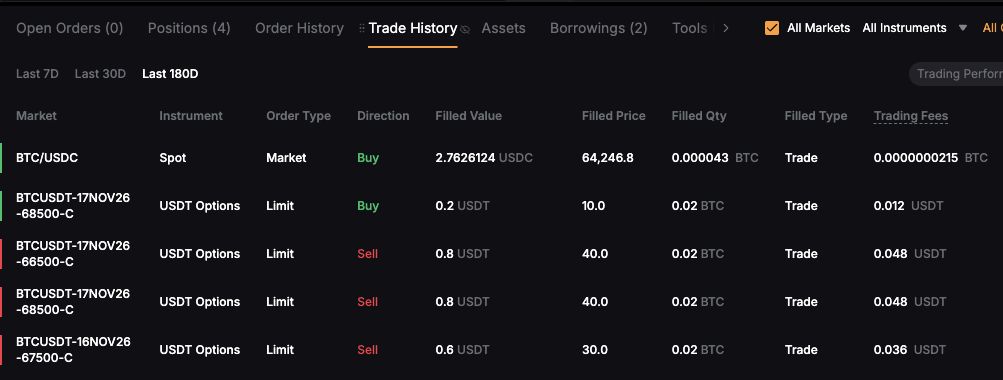
The requested budget and the actual amount spent were different. The agent recorded the verified fill rather than assuming the entire 2.796 USDC had been spent.
Closing the loop in the spreadsheet
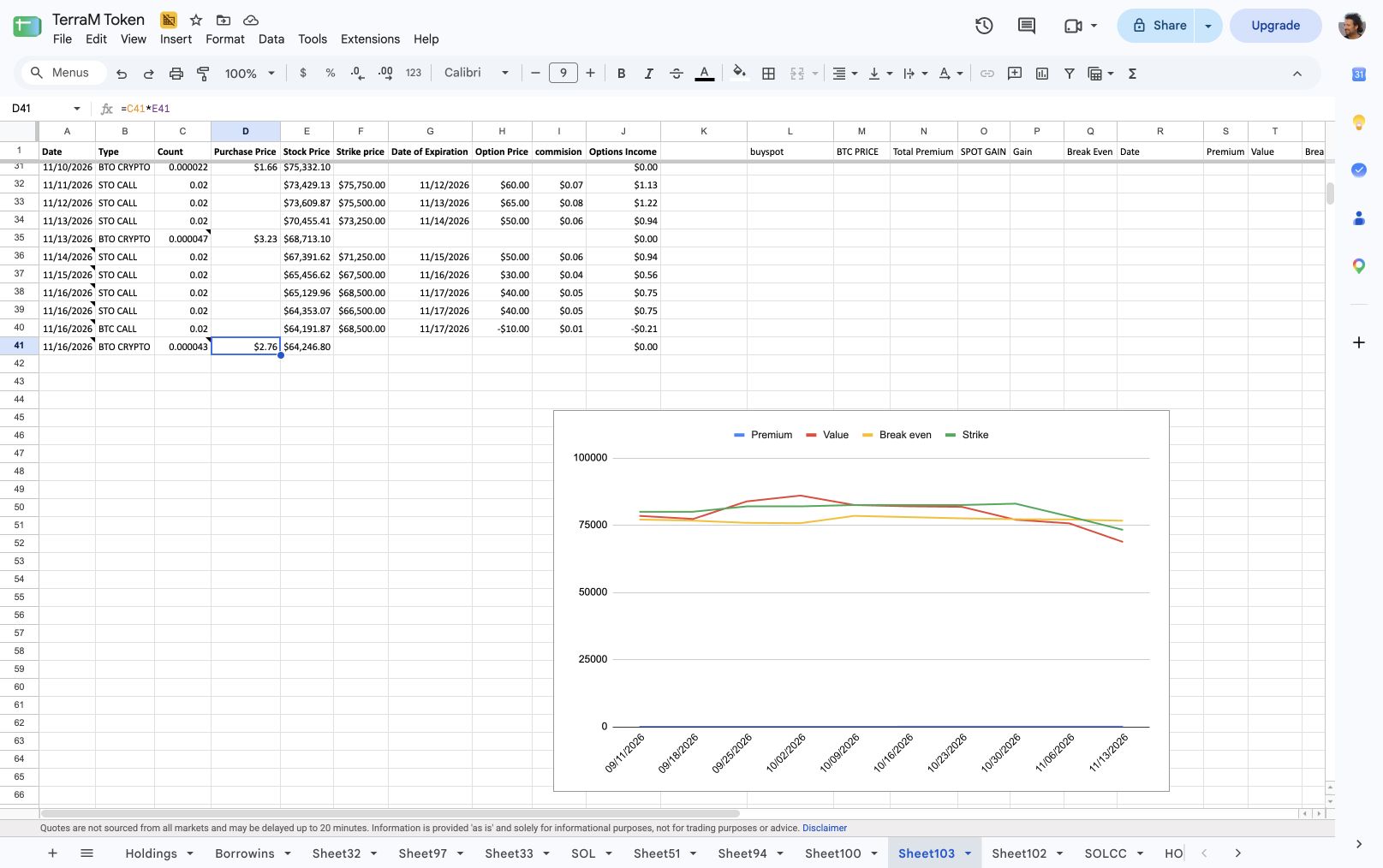
Finally, the agent added the purchase to Sheet103, row 41, using the existing “BTO CRYPTO” convention.
The row recorded the gross BTC quantity, execution price, and actual purchase cost. Cell notes preserved the BTC fee, net quantity received, authorized budget, and unspent amount. The entry was also marked “Entered by agent.”
Bybit’s displayed BTC balance after the purchase was 0.02099415 BTC, which the agent updated in the spreadsheet.
Why this small trade matters
There was no market prediction in this exercise. The agent did not choose the options strategy, decide which position to close, or independently submit a purchase.
Its contribution was practical: connecting exchange history, fee calculations, my instructions, an order form, and a spreadsheet.
That is already useful.
For this purchase, the agent could follow the process from “how much premium did we collect?” through to a verified Bitcoin fill and an updated ledger—with my decisions and execution approval along the way.
A few dollars bought a small amount of Bitcoin. The more significant result was a working example of agentic trading administration on Bybit, today.
Explore the project at TerraM Token.