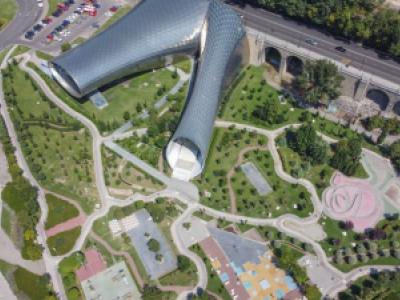
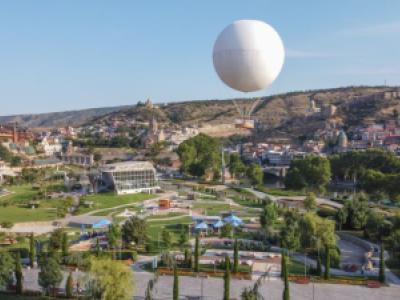
I first noticed it in 2011, soon after arriving in Georgia. I was staying in Avlabari and had not planned my first days in the city particularly well. On my third day, I headed down from near the Presidential Residence via Baratashvili Bridge and saw the unfamiliar steel-and-glass shape over the river. I did not cross it immediately, but returned a few months later and quickly understood why it had become part of so many walks through central Tbilisi.
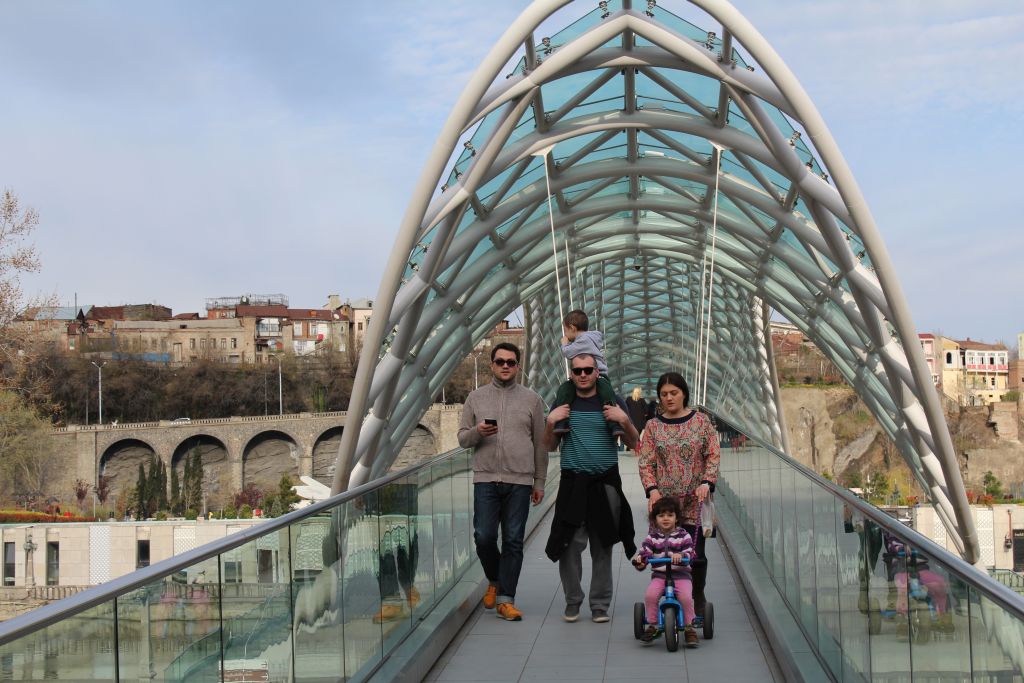
The Bridge of Peace in Tbilisi
Bridge of Peace, Rike Park and Narikala
The bridge is one of the easiest ways to move between Old Tbilisi and Rike Park. From the Rike side, the aerial tram goes up towards Narikala, while the Old Town side leads naturally towards the riverfront, Metekhi and the older streets below the fortress.
Its bow-shaped steel-and-glass canopy is especially noticeable after dark, when the lighting comes on. The bridge was designed by Italian architect Michele de Lucci and is a contemporary counterpoint to the older landmarks around it; that contrast is part of what made it memorable to me in 2011.
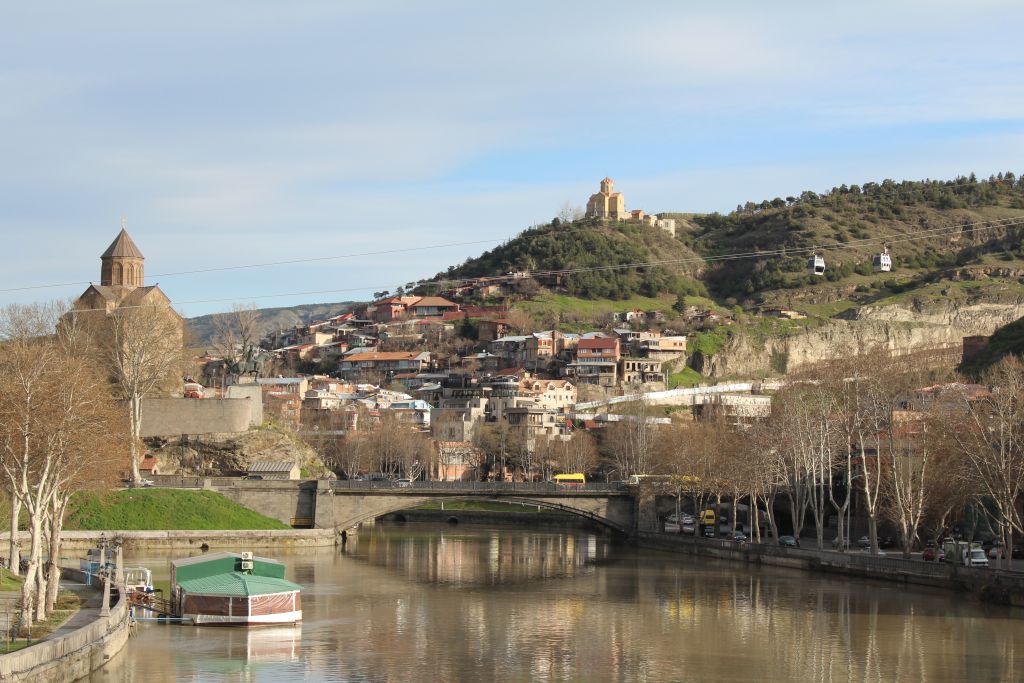
View towards Tbilisi Old Town
Standing in the middle gives a good view towards Old Tbilisi, Narikala and the river. My original photographs were taken with a basic kit lens, and I am keeping them as they are: they are part of the first walks that helped me get to know the city.
A simple central-Tbilisi walk
For a short route, cross from Old Town to Rike Park, take the tram up if you want the viewpoint, then walk back down through the old streets. The area has continued to change since these photographs were taken, but the bridge remains a useful orientation point. It also sits close to the central-Tbilisi setting of my Tbilisi Marathon 2026 report.