Landing at BER was straightforward. The airport is clearly designed with efficiency in mind—wide corridors, good signage, and a layout that doesn’t feel chaotic despite Berlin being a major European hub.
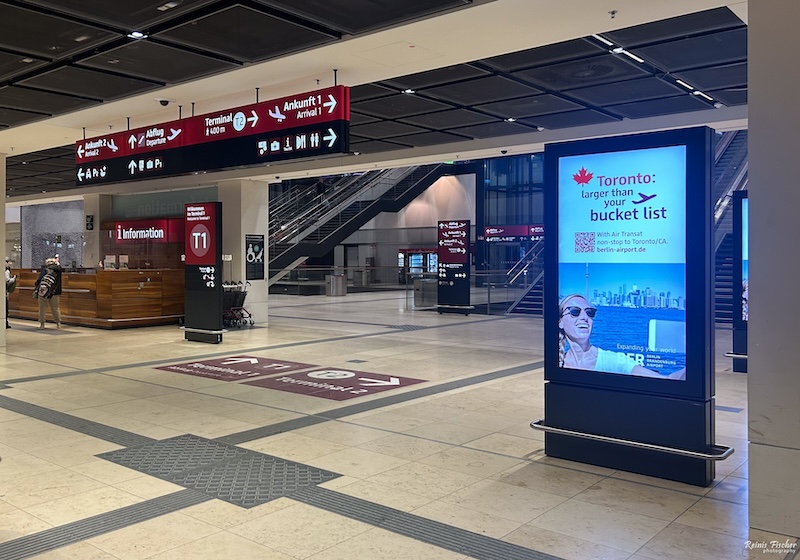
From the airport, I opted for convenience over cost.
I ordered an Uber to reach our hotel on Chausseestraße. The ride cost about €60 and took roughly 45 minutes, which felt fair given the distance and traffic conditions. For a group or if you value time and comfort, this is a reasonable option.
That said, Berlin also offers cheaper public transport alternatives (regional trains and S-Bahn), but those require more planning and transfers—something I chose to avoid after a flight.
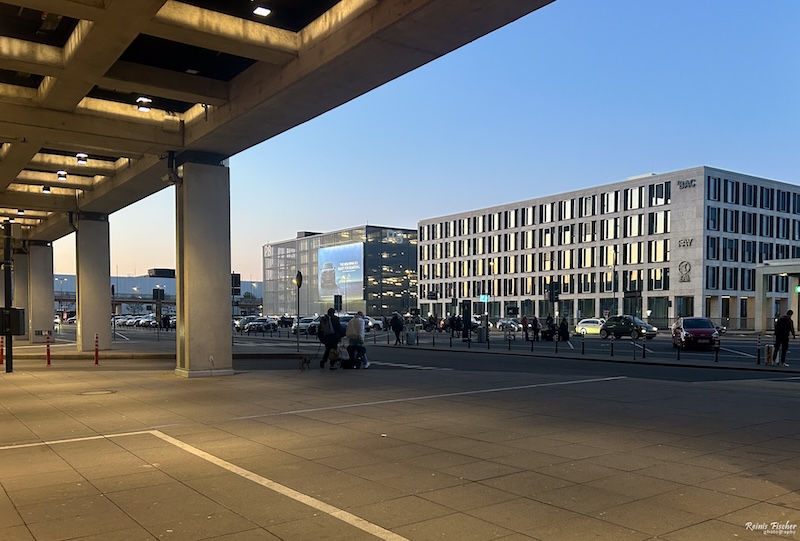
Berlin Brandenburg Airport has a rather unusual history.
Originally planned to open in 2011, the project became infamous for massive delays, engineering issues, and budget overruns. Problems ranged from fire safety systems to structural and planning errors. As a result, the airport didn’t officially open until October 2020, nearly a decade late.
It replaced the older Tegel and Schönefeld airports, consolidating Berlin’s air traffic into a single hub.
Despite its troubled beginnings, BER today functions as a modern and capable airport.
BER serves as a key hub for both full-service and low-cost carriers.
Major airlines operating here include:
- Lufthansa Group airlines
- easyJet (one of the largest operators at BER)
- Ryanair
- airBaltic (which I flew with)
The airport connects Berlin to:
- Most major European cities
- Key business hubs like London, Paris, and Amsterdam
- Increasing numbers of long-haul destinations
The Riga–Berlin route is well-served and efficient, making BER a convenient entry point for travelers from the Baltics.
BER is modern, but somewhat minimalistic.
What stands out:
- Clean and functional terminals
- Efficient security processes
- Decent selection of shops and cafes
What’s less impressive:
- Limited “wow factor” compared to airports like Munich or Zurich
- Some areas feel more utilitarian than premium
Still, for most travelers, it does the job well.
Berlin Brandenburg Airport is a practical, no-nonsense airport. It may not be iconic, but it works.
For me, the key takeaways from my first visit:
- Smooth arrival and departure process
- Reasonable travel time to the city (~45 minutes)
- Predictable and fair Uber pricing (~€60)
- Solid connectivity across Europe
After years of delays and criticism, BER seems to have settled into a stable operational rhythm.
If you're flying into Berlin for the first time, expect efficiency—not luxury—and you’ll likely be satisfied.