As of October 30, 2026, our options-selling-powered dividend stock portfolio stood at $13,395, marking a weekly decrease of 0.85% compared with the previous week.
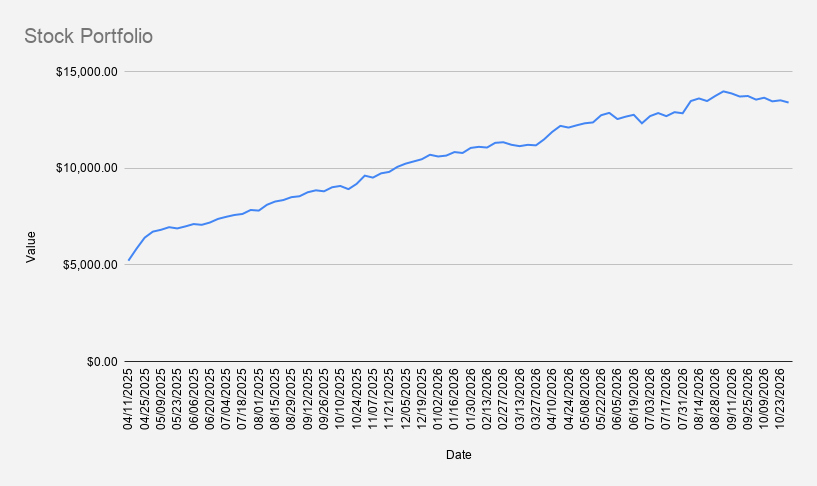
Year to date, our portfolio is up 33.24%. Despite the modest weekly decline, I'm pleased with how the portfolio has performed so far this year. However, strong returns don't necessarily mean every position is working as intended. This week offered a few good reminders of that.
Our biggest focus was Bristol Myers Squibb (BMY), where we recently switched to the wheel strategy. Meanwhile, Bank of America (BAC) and Netflix (NFLX) remain our more challenging options positions. And then there's NVIDIA (NVDA), where the latest technology selloff has me reconsidering when to become more aggressive again.
Technology Stocks Under Pressure
The final trading week of October brought renewed pressure to US equities, particularly technology and artificial intelligence stocks. Investors have become increasingly concerned about the enormous capital expenditures required to sustain the AI boom, and whether these investments will translate into the earnings growth needed to justify current valuations.
Disappointing reactions to earnings from companies including Alphabet, Amazon and Intel contributed to the selling pressure. NVIDIA was caught in the broader decline as investors reassessed the outlook for AI-related stocks.
What I find particularly interesting is that this hasn't been a uniform market selloff. While several major technology companies have struggled, parts of the healthcare, energy and financial sectors have shown greater resilience. This is an important distinction for an options seller: higher volatility can create better premiums, but it also increases the risk of being caught on the wrong side of a position.
I'm not convinced this is the beginning of a prolonged bear market. Equally, I'm not convinced the correction is over. For now, preserving buying power looks more attractive than chasing every apparent bargain.
BMY Earnings: Our Wheel Strategy Gets Its First Real Test
This was BMY earnings week, and having switched to the wheel strategy on Bristol Myers Squibb just a couple of weeks ago, it was probably the position I watched most closely.
Fortunately, the earnings were encouraging. Third-quarter revenue increased 7% to $13.1 billion, supported by the company's newer medicines, and management raised its full-year revenue forecast to between $49.75 billion and $50.25 billion.
The report wasn't perfect. The company also lowered its adjusted earnings-per-share guidance, reflecting charges and licensing-related items. Still, the overall revenue picture was encouraging enough to support our decision to continue trading BMY.
Our weekly $59 cash-secured put expired worthless, allowing us to retain the premium. We then opened a new $61 cash-secured put expiring November 6.
This is precisely what I like about the wheel strategy. If the stock stays above the strike, we collect the premium and can consider selling another put. If it drops below the strike and we are assigned, we can potentially transition to covered calls, provided we remain comfortable owning the shares.
Of course, the wheel doesn't eliminate downside risk. If BMY falls significantly, the premium collected will offer only limited protection. That's something I'll be watching closely, especially with the new $61 strike.
BAC and NFLX: Managing the Challenged Positions
Things haven't been quite as bright with our other challenged positions, particularly BAC and NFLX, where both bear call spreads have moved into the money.
These are good examples of why collecting options premiums is not the same as earning guaranteed income. When a stock moves against a short option, the position can require significantly more patience and capital than originally anticipated.
For now, I'm not particularly interested in forcing an exit simply because a trade has become uncomfortable. Instead, I'll continue evaluating the remaining time value, potential losses, rolling opportunities and whether the original assumptions behind each trade still make sense.
One important lesson I've learned is that rolling a challenged trade doesn't make a loss disappear. Sometimes it improves the position. Other times, it simply extends the risk. The distinction matters.
NVIDIA: Was Pausing Credit Spreads the Right Decision?
And then there's NVIDIA. The stock came under serious selling pressure toward the end of the week, reinforcing my recent decision to pause opening new NVDA credit spreads.
Sometimes the best trade is the one you don't make.
NVIDIA remains one of the most interesting companies in the market, but I increasingly question how much optimism is already reflected in its valuation. The AI story is far from over, yet even exceptional companies can experience substantial corrections when market expectations become too ambitious.
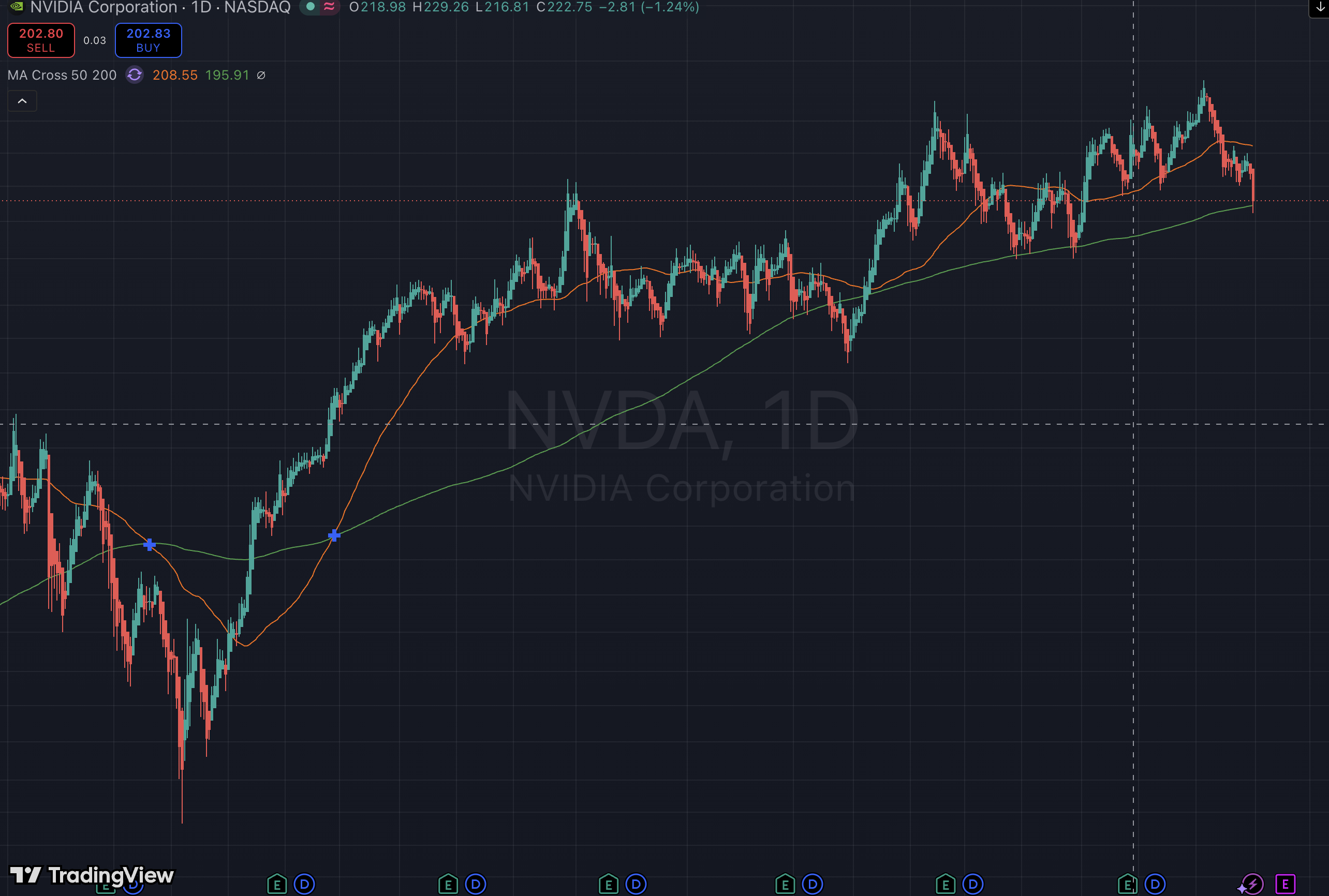
Interestingly, the recent weakness is making NVIDIA attractive to me again, although perhaps not quite yet.
I'm not ruling out a move toward $150 per share, particularly if we experience a broader market correction or another wave of selling across technology stocks.
At that price, I would seriously consider increasing my exposure, potentially quite aggressively. But I wouldn't want to go all in simply because the stock reached an arbitrary price target.
I'd want to reassess revenue growth, margins, AI infrastructure spending, customer demand and the broader market environment. A falling share price doesn't automatically make a stock cheap.
Meanwhile, our existing NVIDIA exposure remains covered by the long-dated January 2028 $130 call, so I also need to consider how that commitment affects any additional position.
Current Open Options Positions
- BMY NOV 6, 2026: $61 Cash-Secured Put
- BMY NOV 20, 2026: $55/$50 Put Credit Spread
- NFLX NOV 20, 2026: $85/$105 Bear Call Spread
- BAC DEC 18, 2026: $57.5/$60 Bear Call Spread
- LHA (Frankfurt) DEC 18, 2026: €7 Cash-Secured Put
- BAC MAR 19, 2027: $55 Short Put
- NFLX DEC 17, 2027: $64 Short Put
- NVDA JAN 21, 2028: $130 Covered Call
Our open positions now span several expiration dates, ranging from short-term weekly options to long-dated contracts extending into 2028.
This gives us exposure to different time horizons, but it also creates different types of risk. Short-term contracts require more active management, while long-dated positions can tie up capital and limit flexibility for many months.
Our reported options premiums collected during Week 82 reached $58. This was below some of our stronger weeks, but I'm not particularly concerned about maximizing premium income every single Friday.
In fact, given the current market environment and our existing challenged positions, I'd rather collect less premium than take unnecessary risks merely to maintain a particular weekly target.
Our outstanding margin debt now stands at approximately $2,385, slightly lower than a week ago.
In theory, if we directed the entire $58 in weekly options premiums toward paying down margin debt, it would take approximately 41 weeks to eliminate the remaining balance.
Of course, this simple calculation assumes consistent weekly premium collections, no additional borrowing, and no interest expenses, taxes, trading losses or other portfolio changes. It is an illustration rather than a repayment forecast.
Margin is particularly worth watching during market corrections. Even when a portfolio is profitable overall, a combination of falling stock prices and challenged short options can quickly reduce available buying power.
Portfolio Accumulation: BMY, NIO and NU
This week, we continued our gradual portfolio accumulation by adding:
- 0.1 share of Bristol Myers Squibb (BMY)
- 2 shares of NIO (NIO)
- 2 shares of Nu Holdings (NU)
These are relatively small purchases, but that's the point. I'm not trying to transform the portfolio overnight. I'm interested in accumulating shares steadily, using available capital and options income where appropriate, without allowing any single position to dominate the portfolio.
Over time, larger holdings may also create opportunities for additional covered call strategies, although standard US equity options generally require 100 shares per contract.
What I'm Watching Next Week
Next week could be another interesting one. The market will be digesting more corporate earnings, including reports from Apple, Palantir and AMD, alongside important US economic data culminating in Friday's employment report.
My priorities will be relatively straightforward.
- BMY: Monitor the new $61 cash-secured put expiring Friday, November 6. I'll be watching whether the post-earnings strength holds and whether assignment would make sense at that effective entry price after premiums.
- BAC and NFLX: Reassess the challenged bear call spreads, particularly their remaining extrinsic value and potential risk if the underlying shares continue moving higher. I'll consider adjustments only if they improve the overall risk profile.
- NVDA: Continue observing the selloff without rushing back into credit spreads. AMD earnings on Tuesday could provide another useful signal about sentiment toward semiconductor and AI stocks. My longer-term interest remains around the $150 area, although that isn't a guaranteed entry point.
- Margin: Keep reducing the approximately $2,385 balance where practical. I want to preserve enough flexibility to deal with existing obligations before committing capital to new trades.
With the October employment report due on Friday, November 6, I also want to be careful about adding too much short-dated exposure ahead of potentially market-moving economic news.
Final Thoughts
Week 82 wasn't spectacular in terms of premium income, and the portfolio ended slightly lower. But I'm reasonably satisfied with how things are progressing.
The BMY wheel is functioning as intended so far, we continue accumulating shares, and the decision to pause new NVIDIA credit spreads appears increasingly sensible given recent market volatility.
BAC and NFLX remain challenging, and I'm not going to pretend those positions will resolve themselves simply with more time. They require attention and, potentially, difficult decisions. For now, my focus remains on collecting premiums where the risk makes sense, managing existing positions, gradually reducing margin debt and keeping some buying power available.
Markets have a habit of offering the most interesting opportunities precisely when patience is in short supply.
Outside my stock portfolio, I've also been developing TerraM Token, a Solana-based project exploring how realized options-trading profits can support token buybacks and liquidity. It's an interesting experiment connecting traditional options strategies with DeFi. Still early days, but I'll share more as the project develops.
Disclaimer: This article documents my personal investment activity and opinions. It is not financial advice. Options trading involves substantial risk, including assignment, losses exceeding collected premiums and additional risks when using margin. Portfolio figures and performance statistics are based on my records and have not been independently audited.