Recently, an investor friend Rob reached out with a familiar question:
“Can I add XDC and HBAR to my portfolio? Prices look cheap.”
On the surface, this sounds reasonable. Markets were consolidating. Sentiment was mixed. Some high-utility tokens were trading far below prior highs. The temptation was obvious. But there was a catch. The portfolio already had an outstanding margin loan secured against XRP. That changes everything.
The Idea: Use XRP as Collateral to Buy More Crypto
The proposal was simple:
- Use existing XRP holdings as collateral
- Increase the margin loan
- Buy XDC and HBAR at what seemed like “bargain prices”
- Hold until the market reprices the “tech stack” thesis
The logic was narrative-driven:
- XRP for transaction velocity
- XDC and HBAR as infrastructure components
- A coordinated digital finance backbone
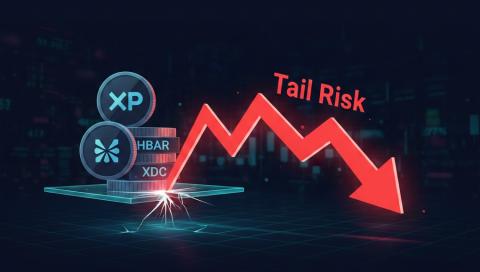
It sounded structured. It sounded strategic. But borrowing against a volatile asset to buy other volatile assets is not portfolio construction. It is leverage stacking. And leverage introduces tail risk.
What Tail Risk Actually Means
Tail risk is not everyday volatility. It is the low-probability, high-impact scenario that wipes you out.
Let’s look at the numbers we discussed.
- Portfolio value: ~$1,000 in XRP
- Existing margin loan: ~$100 (10%)
Manageable. Now imagine XRP drops 50%. That $1,000 becomes $500. The $100 loan remains. Now leverage jumps to 20%. Still survivable - but stress increases.
Now imagine increasing the loan to $300 to buy HBAR and XDC.
- Assets: $1,000
- Loan: $300
If XRP drops 50%:
- Assets: $500
- Loan: $300
That is no longer comfortable. That is margin call territory. And in crypto, 50% moves are not theoretical. They happen.
The Covered Call Alternative (And Its Own Tail Risk)
Another idea was generating cash flow:
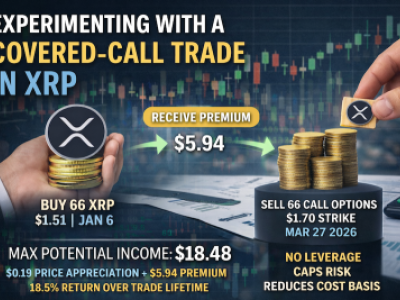
- Sell covered calls on existing XRP
- Use the premium to fund new purchases
On paper, this seems safer. No additional borrowing. But here’s the catch:
- Average XRP buy price: above $2
- Current market price: ~$1.48
- Selling calls at low strikes risks being assigned below cost
If price spikes, you’re forced to sell at a loss relative to entry. That is a different kind of tail risk: capped upside at the wrong time. Covered calls are income strategies - but they are not free money either.
The Real Question: Is the Risk Compensated?
At one point the discussion shifted to something more important: Can the newly acquired assets realistically generate enough upside soon to offset the additional collateral risk? If not, then the strategy is simply increasing fragility. Buying spot crypto with cash you already own? Fine. You risk what you allocate.
Borrowing against one volatile token to buy two others? Now you risk the original asset, the new asset, and the stability of the entire structure. That’s not diversification. That’s correlated leverage.
The Decision
We agreed to wait. Finish the existing loan first. Reassess after. One move at a time. There is always another opportunity in crypto.
There is not always another portfolio after liquidation.
Final Thought: Leverage Kills Quietly
Spot investing is simple: If the asset drops 20%, you’re down 20%. If it goes to zero, you lose what you put in.
With leverage: A 20–30% drop can erase both collateral and the new position. That’s the difference.
Borrowing against crypto to buy more crypto feels sophisticated. Often it’s just disguised gambling. Capital preservation first. Narratives later.