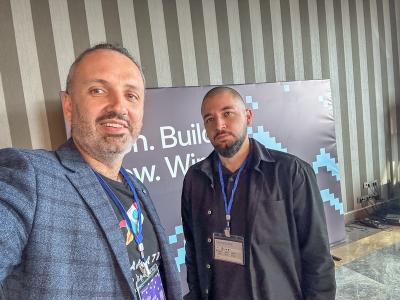
That changed in early February 2026, when the Tbilisi ETH Hackathon (Season 2 or something) finally happened—and I finally made it.
I showed up prepared. Laptop in the suitcase, a few rough AI-related ideas in mind, and at least a vague intention to build something. Reality, as usual, had other plans.
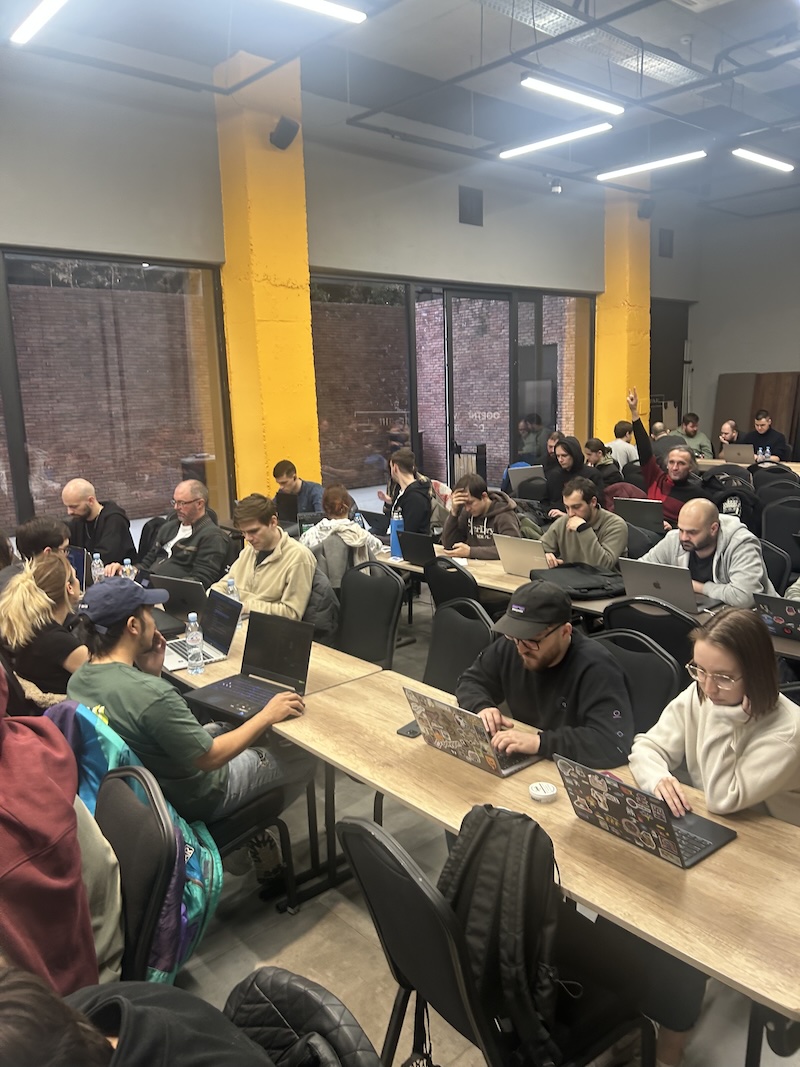
The event itself was solid. Well organized, relaxed, no unnecessary hype. A real hacker crowd. Most people were there to code - and they did. From what I could tell, 80–90% of the participants were Russian-speaking, which isn’t surprising given the large influx over the past few years. The focus was clearly Ethereum-native: smart contracts, infra, tooling, experiments.
I did open my MacBook. Briefly.
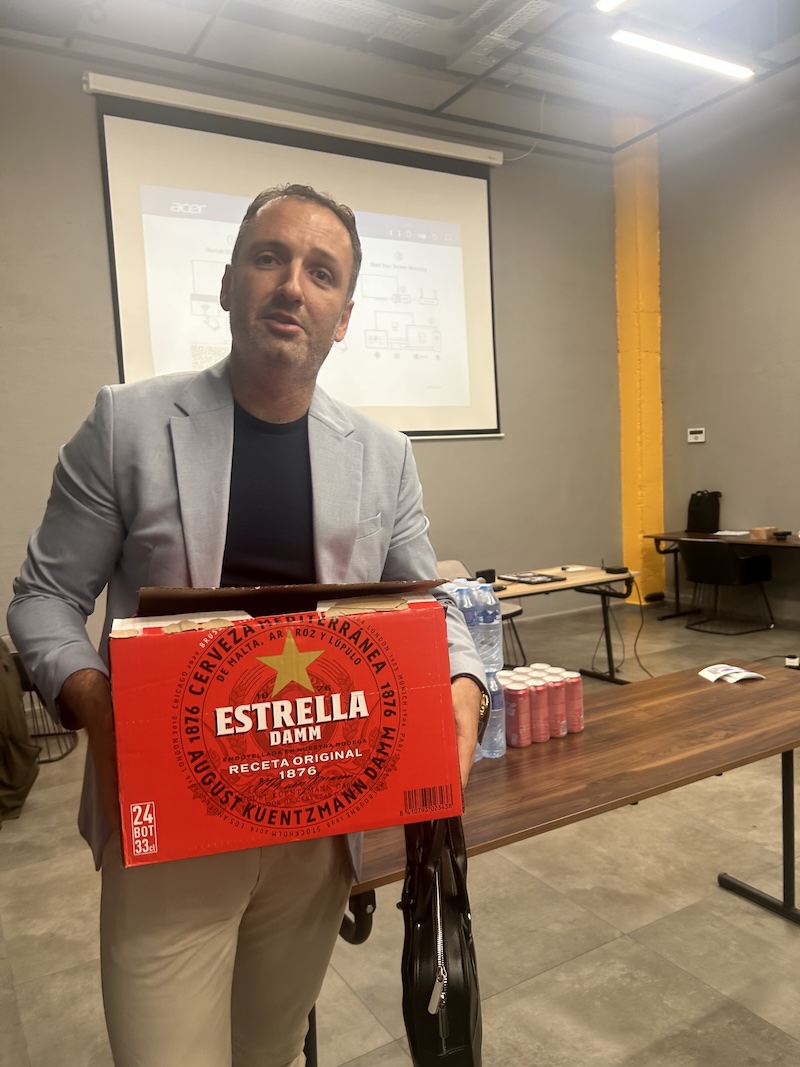
But instead of hacking, I mostly ended up talking - with the host (Italian guy), with fellow crypto people, and yes, over beer sponsored by host (Glue.Finance). No regrets. Hackathons aren’t only about code; they’re also about context, energy, and people. And on that front, it delivered.
At some point you realize you’re no longer the guy grinding through the night on caffeine and commits. I probably looked more like someone who’s “been around.” As usual, I got pitched more than I pitched. That’s fine.
Still, I did manage to talk a bit about our Ethereum strategy—informally, over drinks. No decks, no charts, just real conversation. Honestly, that’s often more valuable than a formal presentation.
This wasn’t my first crypto event in the city. Some time ago, I attended a TON event in Tbilisi as well - different crowd, different vibe, but similarly interesting. Tbilisi continues to quietly position itself as a regional crypto hub: low friction, international crowd, and just enough chaos to keep things creative.
Hackathons are fun. They’re good for networking. They remind you what the builders are actually building.
I didn’t ship code this time. I shipped conversations. That’s fine. Not every hackathon needs a GitHub repo at the end—sometimes it just needs a few good talks, shared context, and a beer.
And next time? Maybe I’ll open the laptop for real. Or maybe not. Either way, I’ll probably show up again.