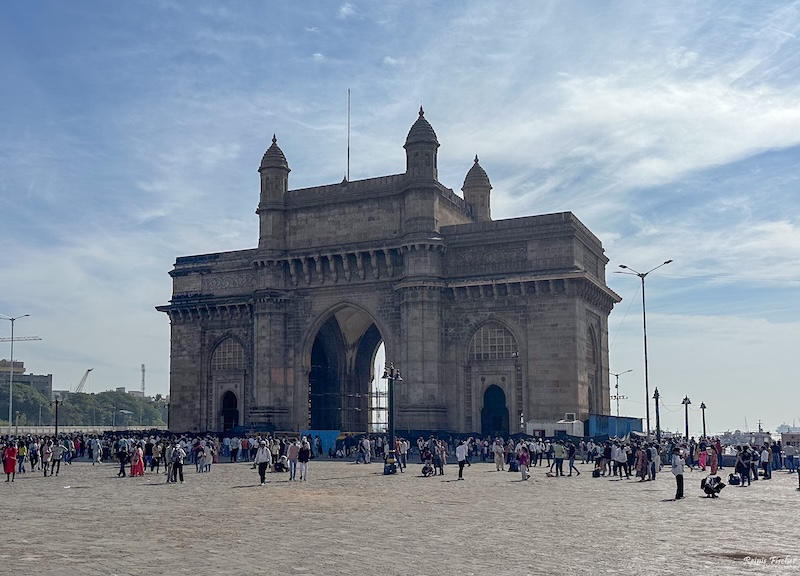
At first glance, it felt like another grand colonial monument by the sea. Busy, touristy, loud. But things changed quickly.
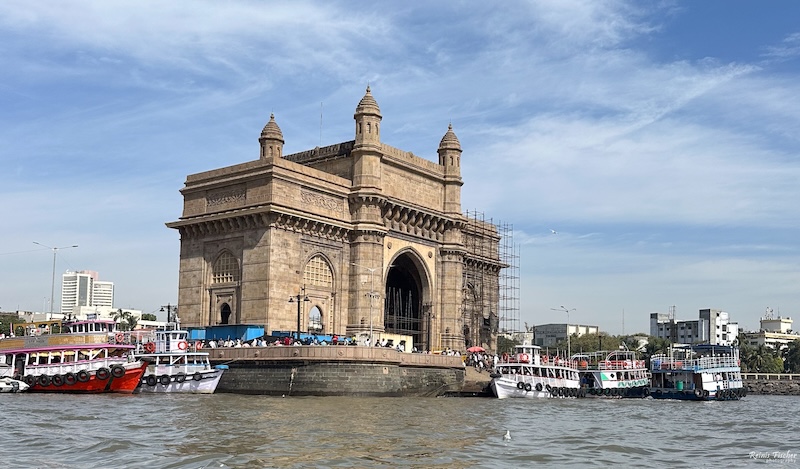
After taking a private boat trip from the harbor — the kind that locals casually offer — and seeing Mumbai’s waterfront from the water, the perspective shifted. Approaching the city from the Arabian Sea makes the Gateway feel less like a monument and more like a threshold. Reading the inscription on the arch, standing beneath the basalt structure, there was a strangely strong energy to the place — layered, unresolved.
Only later did I fully connect the historical dots. That made the feeling stronger, not weaker.
The Gateway of India was constructed between 1913 and 1924, commissioned to commemorate the visit of King George V and Queen Mary to Bombay in 1911. Ironically, when the royal couple arrived, the monument itself didn’t yet exist — they were greeted by a temporary structure on the same spot.
Designed by George Wittet, the Gateway blends Indo-Saracenic architecture with Islamic, Hindu, and European elements. Built from yellow basalt and reinforced concrete, it stands 26 meters high, facing directly toward the Arabian Sea.
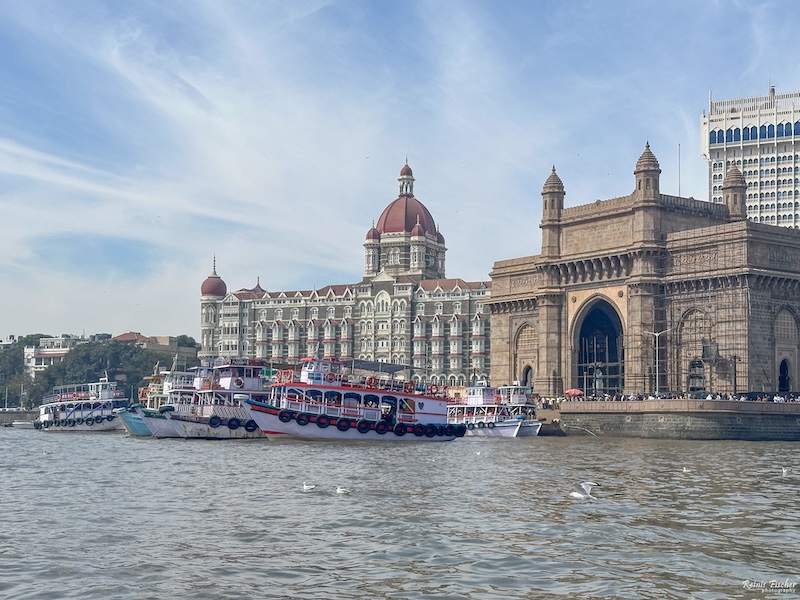
For decades, this was the ceremonial entrance to British India.
And then history inverted itself.
In February 1948, the last British troops left India through this very arch. What had been designed as a symbol of imperial arrival became, unintentionally, a symbol of imperial departure.
That reversal matters.
Standing there, knowing this was both an entry point for empire and an exit point for a fallen one, the place takes on a different tone. There is something heavy and final about it — not celebratory, not tragic, but conclusive. Empires arrive confidently. They leave quietly.
That contrast may explain the odd energy I felt. The Gateway doesn’t glorify power as much as it records its impermanence.
The location amplifies everything:
- The Arabian Sea constantly in motion
- Boats leaving for Elephanta Island
- The Taj Mahal Palace Hotel looming just behind
- Crowds flowing, pausing, moving on
Unlike many monuments, the Gateway isn’t isolated. It’s embedded in daily life — ferries, vendors, tourists, locals. History here is not sealed behind ropes. It’s exposed, weathered, and walked through.
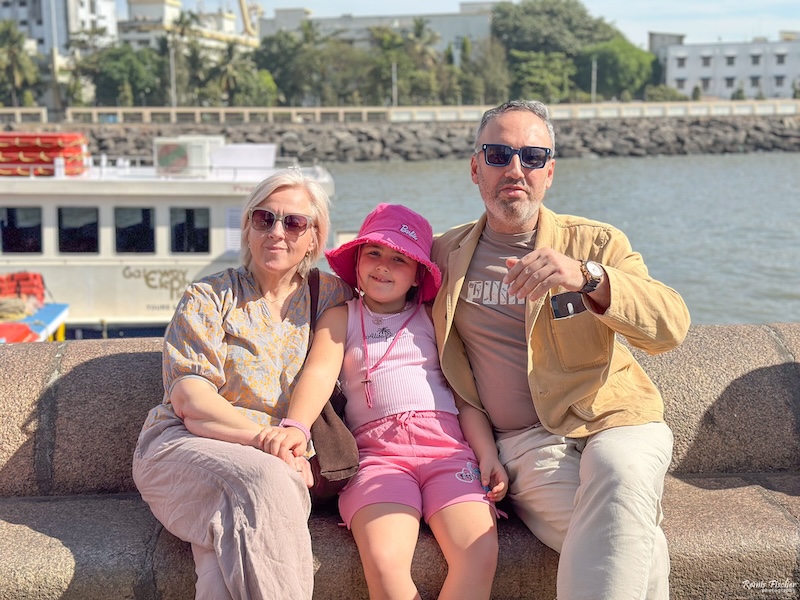
I didn’t come to the Gateway of India looking for symbolism. I didn’t even know what I was looking at when I arrived. But places like this don’t require prior knowledge — they impose it afterward.
Some monuments celebrate beginnings. Others mark endings.
The Gateway of India does both — and that duality is exactly what makes it powerful.